


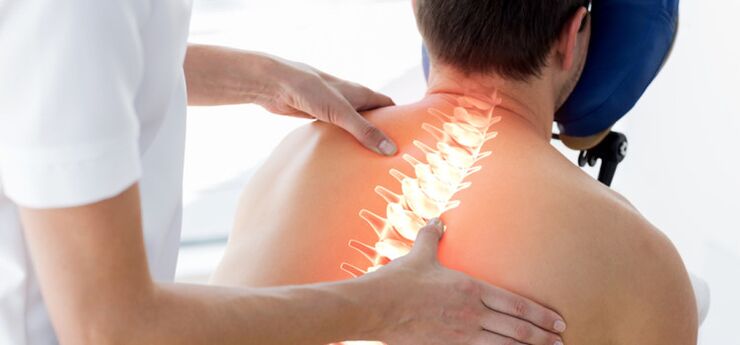
At the moment, there is a situation where, with a disease such as osteochondrosis, symptoms appear in many patients as early as 15 years of age.This pathology has a negative impact on the entire ligamentous apparatus of the spine, and may even cause disability to the patient in the future.We will tell you everything about osteochondrosis: how it can be cured, prevented and the dangers of this disease.

What is that
Osteochondrosis disease – what is it anyway?Before starting to talk about the main aspects of treatment and features of treatment, you need to understand what kind of disease it is.
With this disease, degenerative changes in the spine are triggered, which gradually lead to the limitation of usual movements due to the abundance of unpleasant symptoms.
Osteochondrosis of the intervertebral discs is often diagnosed, since this space cannot recover on its own.
No compensatory processes can contribute to the complete restoration of the vertebra and disc, therefore all therapeutic measures are aimed at preventing their further destruction and avoiding serious complications.
80% of back pain cases are caused by intervertebral osteochondrosis.It is diagnosed at a young age, as risk factors for the disease are observed even in a young group of patients.
Indeed, with a disease such as osteochondrosis, the spine literally contracts, flattening the intervertebral discs.
Until the pathology appears, they are elastic, but later they lose this property and, under pressure, completely transform into a hernia.This is especially noticeable in the lower back, where the skeleton bears the greatest load.
Internships
Intervertebral osteochondrosis in the early stages can be difficult to determine, however, it is in its first forms that all methods of therapeutic therapy give the best effect.There are 4 steps in total:
- I graduated.Only general discomfort is detected, and this same discomfort can easily be confused with manifestations of other diseases or even just physical fatigue.Sometimes the back hurts, but the more prolonged and severe symptoms do not appear.
- II degree.The entire process of destruction of cartilaginous tissue begins.If treatment is started at this stage of spinal osteochondrosis, most of the negative consequences will be avoided.In all parts of the spine, the space between the vertebrae begins to narrow rapidly, which leads to compression of the nerve endings.Pain can only be relieved with medication.
- III degree.At this stage, degenerative changes are corrected.Pathological curvatures are observed in the lumbar region, as in other parts of the spine.In particular, kyphosis, scoliosis develop and even a bulge may form.It is not possible to completely cure osteochondrosis at this stage, but it is possible to eliminate the symptoms and minimize skeletal curvature.
- Grade IV.If before the question of how to deal with osteochondrosis did not interest you much, then it must be said that at the last stage the pathology is already irreversible.Pain almost always accompanies the person;the vertebrae become displaced, become denser and osteophytes begin to grow, which further limits the ability to move.It often happens that patients become disabled.
When adapting, the body tries to compensate for the resulting excessive load, which is why bone growths appear on the vertebrae.
Protruding intervertebral discs can be compressed, which will only aggravate the patient's condition.
Reasons
The causes of osteochondrosis largely lie in risk factors.People with the following problems are more susceptible to the pathology:
- have ever had back injuries;
- are overweight;
- forced to remain in an uncomfortable position for a long time;
- weakened muscular corset;
- excessive physical activity;
- problems in the exchange rate sphere;
- inactivity;
- hereditary predisposition.

All the causes of osteochondrosis described above manifest their negative effects more strongly in the presence of various skeletal diseases.However, there is a peculiarity.
If a person leads an ideal lifestyle and does not even have a reason for the occurrence of osteochondrosis, but there is hormonal instability or problems of endocrine origin, then the appearance of this disease cannot be avoided.
In this case, osteochondrosis has its causes purely in the area of nutrient deficiency.And if these causes of osteochondrosis are supplemented with hard work, the likelihood of its development increases many times over.
Symptoms
So, as it progresses, the signs of osteochondrosis become brighter and brighter.The causes can be very different, but the first to appear are general malaise and discomfort.
Often that's all there is.But as osteochondrosis develops, symptoms increase.It is best to start treatment as soon as possible.
Symptoms of spinal osteochondrosis do not depend on the cause of osteochondrosis, but may differ in the characteristics of manifestation in different parts of the skeleton.

Cervical region
With osteochondrosis of this department, the signs are usually as follows:
- headache;
- “spots” or periodic darkening in the eyes;
- dizziness;
- the appearance of noise, ringing in the ears;
- pain in shoulders, neck.
Signs of osteochondrosis in this department are expressed to varying degrees, but pain is always present.It is characteristic that when you try to move your neck it intensifies.
Negative sensations can often be concentrated in the parietotemporal region.Ultimately, spinal osteochondrosis in this form can significantly impair the strength of the spinal supply to the brain.
Thoracic region
How does osteochondrosis manifest in the thoracic spine?The main signs of osteochondrosis are pain, mainly of a painful nature, which can periodically intensify (for example, during physical overload).The pain may even radiate to the chest.
Angina pectoris can manifest in a similar way, so it is easy to confuse them.
It is possible to distinguish them mainly by the fact that the cause of osteochondrosis has nothing to do with emotional overload.It cannot be stopped with the help of nitrates.
Lumbar
Symptoms of back osteochondrosis in the lumbar region are also expressed mainly by pain.Lumbago can often occur - it is an attack of sharp pain in which the person is unable to assume a different position.
When you try to change this, these manifestations increase in intensity.
Osteochondrosis syndromes are also complemented by the following phenomena:
- limited mobility of limbs;
- muscle spasm;
- neuralgia;
- feeling of numbness in the limbs;
- tingling and chills;
- decrease or, on the contrary, increase sweating.
What causes osteochondrosis here?Excessive skeletal mobility and heavy load cause such symptoms to progress rapidly and treatment must be carried out quickly.
After a few months, the pain may intensify even with tension in the abdominal muscles and, when a gunshot occurs, echoes of pain may appear even in the limbs.
Diagnosis
Is osteochondrosis treated without preliminary diagnosis?No, it is a visit to the doctor and the appointment of instrumental studies that precede all subsequent procedures.
The first step is to contact a vertebrologist, surgeon, neurologist or therapist, who will conduct an examination and prescribe the necessary diagnostic methods.
In each case, it is important to correctly determine the diagnosis and differentiate it from arthrosis, arthritis, spondylosis, radiculitis, etc.
Among the instrumental studies, the most important are:
- radiography;
- magnetic resonance imaging;
- TC.
In addition, a blood test and examination by a neurologist are performed.
Treatment
So, we found out what causes osteochondrosis, but treatment should be given much more attention.
It is the complex treatment of osteochondrosis that gives clear results and maximum effect, but if you simply take painkillers occasionally and do not follow the doctors' instructions, you may not expect an improvement in the clinical picture.
How to get rid of osteochondrosis forever?It is very important for this when the first symptoms appeared and after how long the person went to the hospital.
If this is done at the right time, the therapy will give much more results.In general, it aims not only to relieve pain, but also to eliminate inflammation.

Drug therapy
Effective treatment of osteochondrosis is impossible without drug therapy.No other method, be it traditional treatment or physiotherapy, can eliminate a disease such as osteochondrosis.
In the first phase, medications are used to combat the most striking manifestations.Which symptoms are relieved first?Of course it is pain.For this use:
- Anti-inflammatory medications.Treatment of spinal osteochondrosis can begin with injections, if the pain is extremely severe, then move on to tablets and topical medications (gels, ointments).Medicines perfectly help to relieve swelling, eliminate the inflammatory process, which also helps to relieve pain.It is better not to base your choice on other people's reviews, but rather consult a doctor.
- Painkillers.They are not able to provide a pronounced therapeutic effect alone, so they are used in combination simply to relieve pain.You can use any suitable name for pain relievers, including antispasmodics.
- Muscle relaxants.If you do not get rid of the pain using the methods described above, your doctor will use muscle relaxants as a replacement for conventional pain relievers.They are used to relieve muscle spasms and release compressed nerve roots.
Is it possible to cure osteochondrosis only with the help of the medications described above?

No, therefore therapy must be complemented with means such as:
- Antidepressants and sedatives.They do not relieve direct symptoms (pain, stiffness), however, if the treatment of the problem of osteochondrosis continues for a long time, they are prescribed without fail.This is due to a general depressive state that occurs against a background of intense pain.
- Chondroprotectors.This category of drugs is prescribed regardless of the reason for the appearance of osteochondrosis.They allow you to restore the tissue of the intervertebral disc and cartilage and completely prevent their further destruction.Medications are prescribed for long-term use.
- Vitamin complexes.You can treat back osteochondrosis for as long as you want using the medications described above, but it will be of great importance whether the spine receives adequate amounts of minerals and vitamins.The doctor is obliged to periodically select a complex vitamin preparation for a course of treatment.
- Vasodilators.Necessary to restore blood circulation in the skeletal region, as it has been without adequate nutrition for a long time.Restoring this area will accelerate the positive results that the treatment will provide.
All described categories of medicines in the required doses are selected exclusively by doctors!You can stop the syndrome yourself, but long-term treatment without a doctor's supervision will not lead to positive results.
Rehabilitation therapy
The described methods of treating osteochondrosis are necessarily supplemented by physiotherapy.In this way, we simultaneously influence the causes and the treatment is carried out in parallel.
Your doctor may prescribe a range of physical therapy treatments, such as:
- swimming;
- heating;
- electrophoresis;
- manual therapy;
- mud therapy;
- acupuncture;
- magnetic therapy;
- laser therapy, etc.
Exercise therapy and massage
These two categories of physiotherapeutic procedures have the greatest positive effect in the treatment of vertebral osteochondrosis.
In acute phases, it is advisable to perform therapeutic exercises under the supervision of a doctor.Even simple exercises can strengthen the muscular corset and support local metabolic processes.
We beat osteochondrosis with the help of physiotherapy exercises like this: first we do light exercises, gradually complicating the task for ourselves.The complex is selected by the doctor based on the general condition of the body.
In the future, when osteochondrosis is cured, what to do?Keep studying.You can also go to the gym to perform strength exercises under the supervision of a trainer, which are useful for strengthening the muscle corset.

Massage procedures are prescribed from the moment the pain begins to subside.They help to achieve several goals at the same time:
- improvement of local blood circulation;
- removal of swelling;
- prevention of repeated muscle spasms;
- improvement of metabolic processes;
- pain relief.
Osteochondrosis of the back is a rather serious phenomenon, so it is better to entrust the massage to professionals who, among others, have medical training.
It is also acceptable to do self-massage daily, but it cannot replace a full procedure.
All the measures described above will allow you to defeat osteochondrosis and avoid all complications associated with it.
How to act during an attack
How to treat spinal osteochondrosis if you are caught in an attack?The general principles of therapy are clear, but in case of a sudden attack, it is necessary to act correctly to relieve acute pain so that it does not interfere with physical activity.
What to do with osteochondrosis in this case?Some tips will help:
- Try to be in the most comfortable position.It is best to limit physical activity and maintain bed rest throughout the acute period.
- If back osteochondrosis worsens, take an analgesic and lubricate the sore spot with any ointment with an anti-inflammatory effect.
- If you don't feel swelling, apply a heating pad to your back.The use of warming ointments is also allowed.However, if you have swelling, it is best to avoid using these products, but just try to keep your back warm so that it does not cool down even more.
- Have someone else lightly massage the painful area with an anesthetic or anti-inflammatory ointment.
- If it is impossible to adhere to bed rest, you should still refuse to play sports.
In total, intervertebral osteochondrosis in the form of an acute attack lasts a week, after which the symptoms subside.Even if the acute phase has passed, you should consult a doctor.
In fact, to the question of whether osteochondrosis can be cured with conventional symptomatic therapy, the answer is categorical and negative.
Prevention
We have already figured out how to cure spinal osteochondrosis, but the prevention of exacerbations and attacks also plays a significant role in this issue.Includes:
- Maintain a nutritious diet without excess calories.
- Take multivitamins.
- Regular but not excessive loads.
- Change your workspace to something more comfortable for your back.
- Visiting a massage, swimming pool or other physiotherapeutic procedures.
- Lose excess weight.
- Equip the bed with a mattress and orthopedic pillow.
- Regular doctor visits to monitor your hormone and endocrine levels.
Try to visit a doctor at least once a year or every six months for a general checkup.It is thanks to a planned medical examination that it will be possible to identify even initial intervertebral osteochondrosis or any other serious disease of the ridge.

Consequences
There are numerous diseases of the spine, but for the spine, osteochondrosis represents the greatest danger, although it does not present any fatal risk.
This is because the first stages go almost unnoticed by the patient or the symptoms are mild, so the person is not in a hurry to see a doctor.
Meanwhile, the disease threatens all areas of the body as the blood supply to organs, particularly the pelvis and brain, worsens.

Back osteochondrosis must be treated in a timely manner, otherwise it can provoke serious consequences, and they can all appear at the same time:
- muscle atrophy;
- lack of oxygen;
- multiple compressed nerves;
- hernia;
- boss;
- circulatory disorders;
- pathological proliferation of vertebral bodies (appearance of osteophytes);
- blood pressure problems.
The symptoms described above do not seem serious, but if no treatment is given for osteochondrosis, in the future it will result in problems that directly threaten the person.

At an advanced stage, the pathology is accompanied by disturbances in cardiac function, breathing and swallowing problems.The functioning of the pelvic organs deteriorates and visual acuity may decrease.
But most importantly, the vertebral form of osteochondrosis can result in disability for a person when the osteophytes begin to fuse together.
So we answered the question: what is osteochondrosis and how to treat it.The most important thing is to prevent the disease from progressing, as it is no longer possible to reverse the degenerative changes that affect the vertebrae and intervertebral discs.